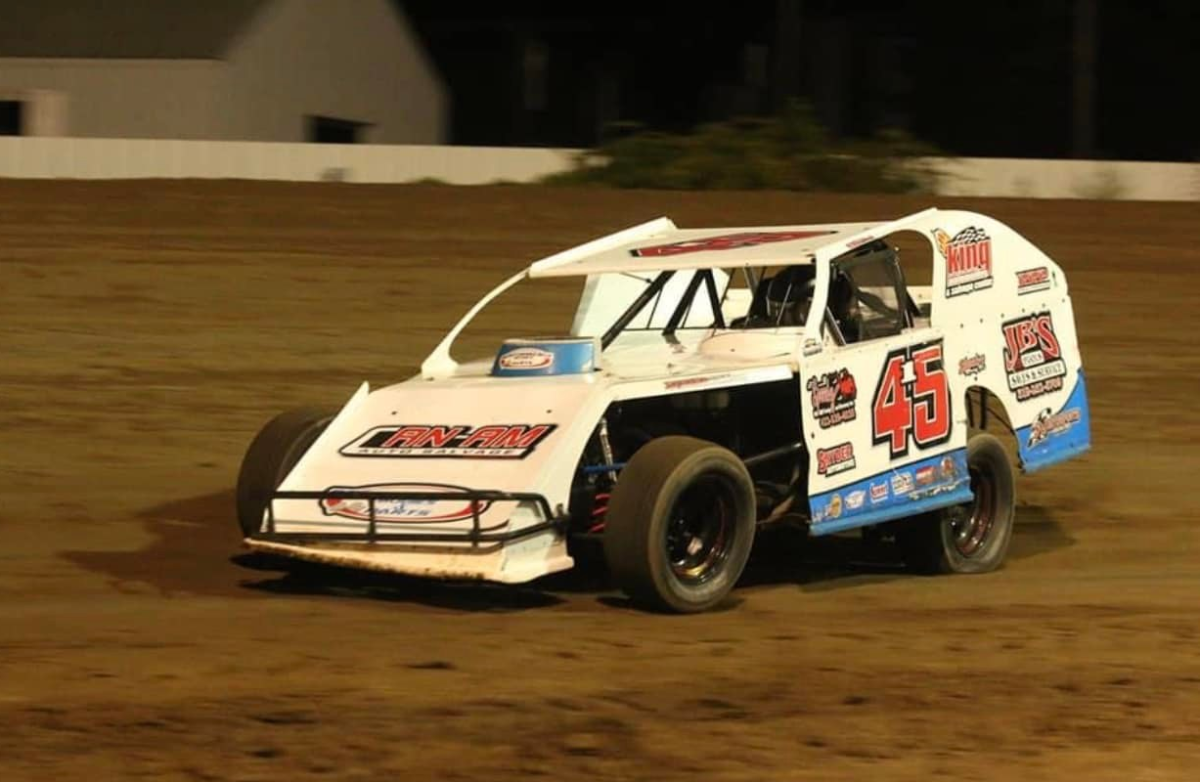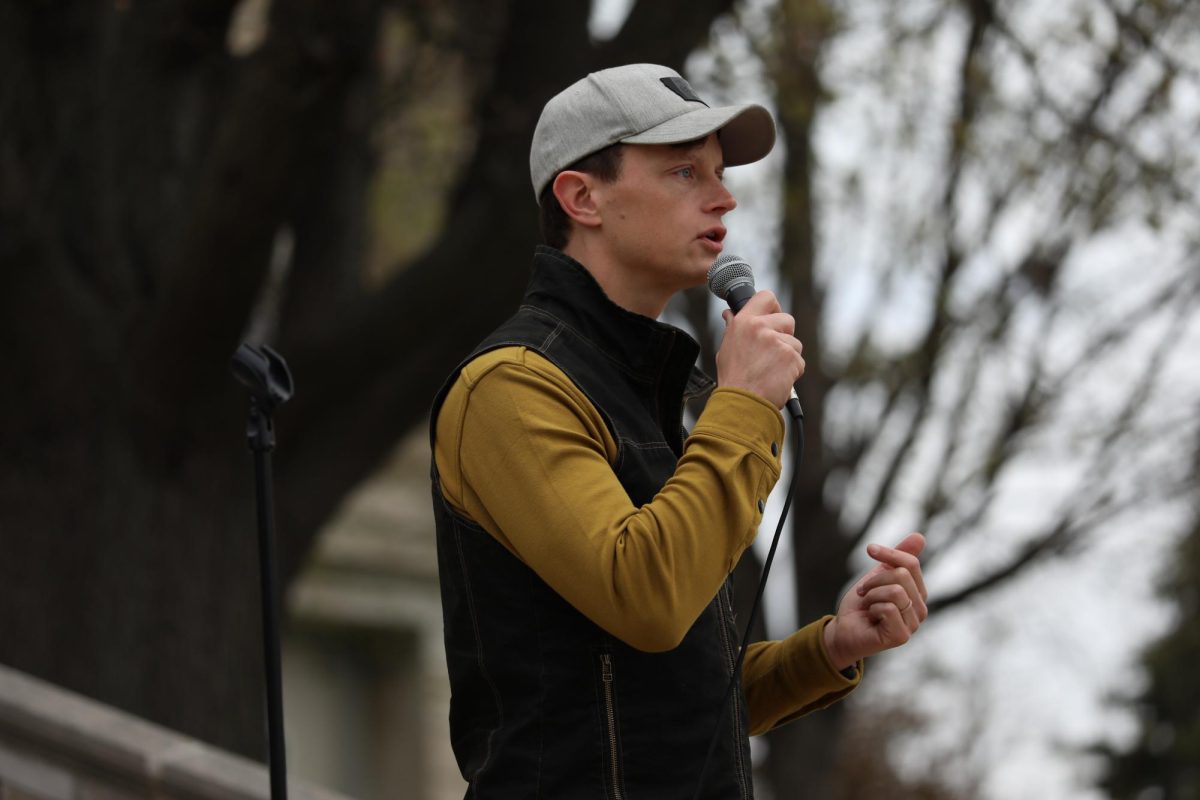

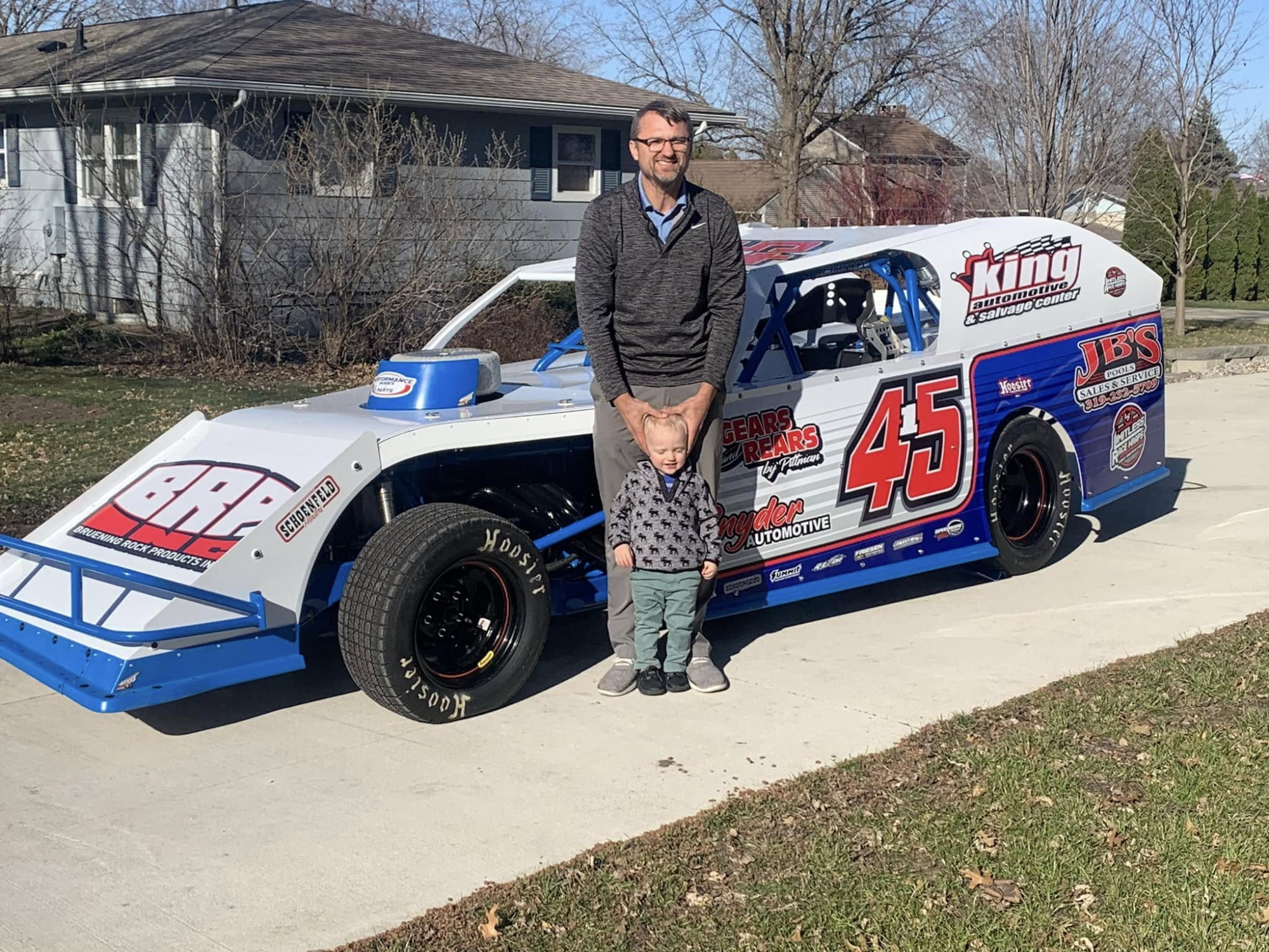
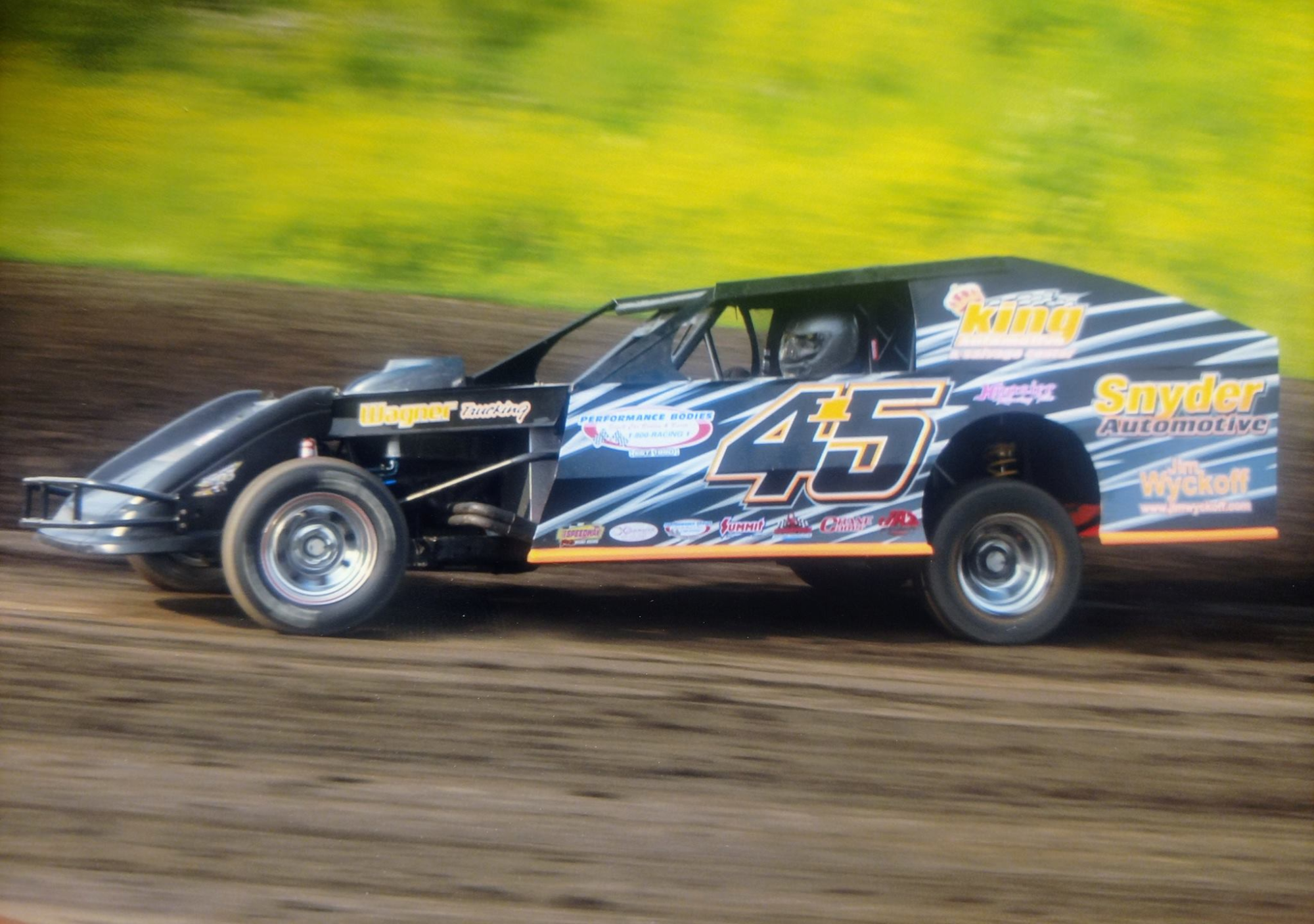
Students typically think of Josh Barta as an educator or a coach, but in the summer, his role looks very different. When school is out, Barta isn’t working as the district’s mentor coach or found on the golf course, he’s behind the wheel of car number 45, shifting gears as a race car driver.
Growing up, racing was always part of Barta’s world. With two uncles who competed, he spent many childhood nights watching them at the Independence Speedway. “I remember going to Independence Speedway to see them race. This was in the early 80s,” stated Barta. “As I grew older I always seemed to be interested in working on things and getting them to work. Not sure why but it was something that I always had fun doing.”
In 1986, his family moved to Georgia, where a new opportunity sped into his life. He now lived across the street from a man who restored vehicles. “I used to go over there all the time and help him work on them. From there I learned about cars and how they worked. He was the kind of guy that was always trading and buying things,” said Barta.
That neighbor gave him an opportunity most wouldn’t. He bought two racing go-karts and let Barta drive them, sometimes for hours on end. “Because I helped him, he let me drive them. He was always very nice to me and taught me things along the way.”
Soon, Barta found himself helping with a friend’s drag car, continuing his interest and strengthening his growing skillset. “I always seemed to find myself helping people with their cars,” he said.
His stepdad also started a business working on trucks, giving Barta more mechanical experience with changing oil, replacing wheel bearings and transmissions, and repairing drive shafts. But after graduating high school, Barta shifted focus to other subjects, ultimately keeping racing and working on cars on the back burner.
Barta attended school and discovered a love for the game of golf. For a few years, he traveled back and fourth from Iowa to Georgia. During this time, another opportunity brought him back to racing when his cousin’s husband invited him to help with his car. “I started helping him and finally got to where I figured I could do it on my own,” said Barta.
Barta eventually purchased his first race car, one that had been previously wrecked. With help from a friend, he rebuilt it. “Buying it wrecked helped me get into the sport easier,” Barta said. “I started racing in Fort Dodge at Sports Park Raceway. It took me about a year to get a trailer, car, tools, truck and everything I needed to go racing.”
Before becoming a race car driver in the Summer of 2012 Barta would start his teaching career in 2011 at East High school as the business teacher. For a long time, Barta he didn’t tell anyone about his hobby of racing cars. “Never really shared it with people just felt like it wasn’t something that kids would understand or others,” says Barta.
Eventually, students figured it out. “Kids would come in and say ‘Do you race?’ and I would say yes, they would be like ‘I saw you!’ Which I always thought was funny.”
For many students, including juniors Dylan Wagner and Jackson Stanford, learning that their golf coach spends his summer flying around dirt tracks at more than 90 miles per hour changed how they saw him. What seemed like an everyday teacher suddenly became someone living a life far bigger than they expected. “I was very shocked that he did something else that was so big. I think it’s very interesting that he is a race car driver. I think I would watch him. It would be pretty cool to see my golf coach race,” said Wagner.
Stanford shares a similar surprise and remembers when he found out about Barta’s hobby. “He was never very open about it until one random day it got brought it up on the way to a meet. Any time he talked about it he was so humble about it and would shrug it off as if it was nothing. But that’s a lot of the person he is, and I think he’s the perfect example of people’s ability to surprise you in different ways,” said Stanford.
Today, he continues to race at Independence Raceway, the same track his uncles once ran, competing alongside racers he grew up watching, like Greg Kastli and Curt Martin.
Racing, Barta says, isn’t just a casual hobby, it’s a lifestyle that demands time, money and a support system of those who understand racing. In a book Barta read early on in his racing career offered advice that stuck: “Make sure you have everyone on board, and NEVER let racing become more important than your regular life.”
Barta was only able to get into this hobby by working weekly alongside someone experienced to learn the mechanics, maintenance, and preparation required. “A good racing program is more about being organized and prepared for every race you attend,” Barta said. “It’s expensive so, don’t go racing unless you’re ready.” He added that knowing how to maintain the car prevents costly breakdowns, and beginners don’t need a perfect car on day one, just patient. “The best part about racing is you can buy a car and slowly build it. Then when you get it complete, you won’t be broke.”
Barta balances teaching and racing by competing during the summer and spending winter months preparing the car. Through racing, he has met notable drivers, including Super Late Model racer Mike Marlar and former NASCAR driver David Stremme.
This year, he shared his car and trailer with students at the Waterloo Career Center, hoping to inspire the next generation of racers, mechanics, and dreamers.