


























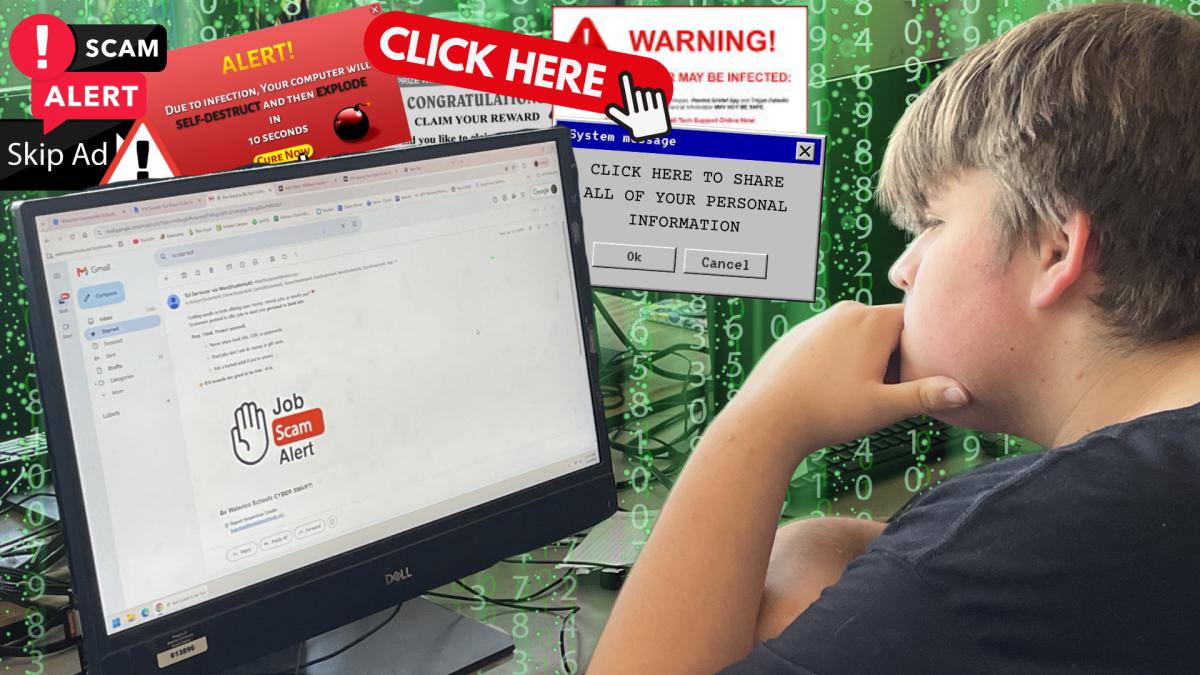








Over the past few months, there has been a rapid increase in the amount of spam and suspicious emails that students and staff have been receiving. Most of them being scam job offers, which is typically sent by a google form. What’s harmful about these emails is the prompts on the forms are asking for students’ bank accounts, phone numbers, and other personal information, which can be used for nefarious purposes.
Some students feel that the district should be taking accountability and helping students identify emails that could be scam. With no class or education prior to high school about identifying scam emails or calls, students are more likely to look through these forms and to think it’s safe because it’s sent to their student email account. West High Junior, Alayah Jones believes that the Waterloo district should improve email security and help fellow students know when an email is a scam or not. Classmates agree, voicing how they understand that these emails are bad and even now, they find it a bit annoying.
Unfortunately, this isn’t just a Waterloo issue. Cyberattacks have significantly increased this year, with an astonishing 62% more compared to global average. Schools across the country-and around the world-have seen an increase in phishing and spam emails targeting students and staff. Having a weak, easy to guess, or reused password can be easily exposed in a data breach.
In a shared statement, Ron Morlan, Jaxon Doland, and Matt Harken discussed how the district is moving forward against the cyber attacks, stating “The district has implemented a number of security measures behind the scenes to help prevent accounts from being compromised. While we cannot publicly share all of our security practices, we continuously monitor threats and make improvements to our security systems.” They mentioned how the district uses several layers of protection to help keep student and staff accounts secure. And that our district technology team follows a set process to quickly remove harmful messages and secure affected accounts. This school year, they have sent at least six emails to students with tips on recognizing scam emails and how to make accounts more secure. Technology alone can’t stop every cyber threat. One of the most effectives defenses against phishing is recognizing suspicious activity and to report it.
If a email seems suspicious, pause before responding. Be especially cautious of messages that have a sense of urgency, offer rewards or money, or ask for bank information. A single report can help protect hundred of students in the long run.